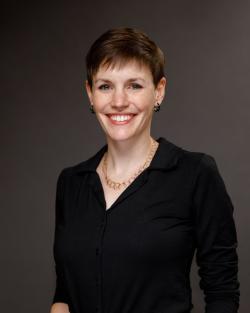
From the advent of bronze smelting thousands of years ago to the development of plastics in the early 1900s, the discovery of new materials has unlocked technologies that change the way humans live. University of British Columbia researcher Alannah Hallas believes the next game-changer will be quantum materials.
At the university’s Blusson Quantum Matter Institute (QMI), her 15-person lab designs and grows crystals not found in nature, with a particular focus on materials with strong quantum mechanical effects.
She likens the process to cooking. They begin by assembling carefully chosen ingredients: combinations of chemical elements that theory and experience suggest are likely to favour quantum behaviours.
Then they add heat. This allows the ingredients to mingle, react and transform into intricate crystal structures with powerful quantum magnetic and electronic properties that can be characterized by Hallas and her QMI colleagues.
Fine-tuning crystal growth in real time
The challenge is finding the right proportions of ingredients, the right degree of heat and the right “cooking” time to achieve those properties. “It’s a bit of a trial-and-error process,” says Hallas. “Every new material is a multi-year saga.”
Until recently, part of that challenge was the inability to observe the process. Crystal growth occurs at extremely high temperatures, so conventional lab furnaces are opaque, highly insulated environments, where reactions take place out of sight.
The lab’s two new CFI-funded floating zone image furnaces overcome this limitation by focussing the heat on a single point rather than warming the entire chamber. That leaves the surrounding environment cool enough to place a camera close to the action, allowing the researchers to directly watch the melting and crystallization process as it unfolds and to adjust growth parameters in real time.
Now, the lab is in the process of commissioning a third furnace that adds pressure as well as heat — the first of its kind in Canada. This will give Hallas and her team another parameter to play with, allowing them to create crystals that would never form with heat alone. “It just opens up an entire new world that you can explore,” says Hallas.
Laying the foundations for new quantum technologies
According to QMI Facilities Director Pinder Dosanjh, the kind of discovery science that Hallas does creates the opportunities for big breakthroughs.
“She’s coming up with new materials that haven’t been made before. That’s super exciting,” he says. “Because if you don’t have that inflow of new ideas and new technologies, you can never build the future.”
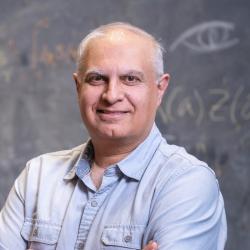
QMI was launched in 2010 to understand and design materials at a fundamental level. Today it’s one of the five top quantum material research institutes in the world, thanks in large part to CFI support, according to Dosanjh. “You can’t compete internationally unless you have the right kind of equipment,” he says.
Now, a major focus is translating that research to industry, where Hallas’s crystals might hold the key to dramatically improving battery performance or hard-drive storage, for example — or something even more transformative.
That’s the potential of fundamental quantum materials research. “You might discover that one-in-a-billion material that enables technologies that we can’t even imagine today,” Hallas says.
The research project featured in this story also benefits from funding from the Canadian Institute for Advanced Research and the Natural Sciences and Engineering Research Council of Canada.