


Strategic Advisory Group on National Research Facilities
Karimah Es Sabar, Chair
Karimah Es Sabar is a highly recognized Canadian life sciences leader with global experience across the pharmaceutical, biotechnology and venture capital sectors. She has built and led high impact organizations worldwide, serves on numerous national and international boards and advisory bodies, and plays a significant role in shaping innovation policy, health research translation and economic development in the life sciences. Over the course of her career, she has raised over $1.5 billion for various private and public global biosciences enterprises and has facilitated investment in 32 health technology companies globally.
She is a Corporate Director, Strategic Advisor and the former CEO and General Partner of Quark Venture LP, a Canada-based global venture capital firm, and Director of the Global Health Sciences Fund, investing in therapeutics, vaccines, medical devices, digital health, AI and convergent technologies. Previously, she was President and CEO of the Centre for Drug Research and Development and Founding CEO and President of Life Sciences BC, and held senior international leadership roles at Sanofi Pasteur, where she helped launch first in class vaccines and biotherapeutics.
She holds an Executive Certificate in Management and Leadership from the MIT Sloan School of Management, an MSc in neurochemistry from the Institute of Psychiatry at the University of London, and a BSc Joint Honours degree in biochemistry and chemistry from the University of Salford, Manchester, England. She is the recipient of several awards including Canada’s Most Powerful Women: Top 100 Award, and she is Member of the Order of British Columbia.
Catherine Beaudry
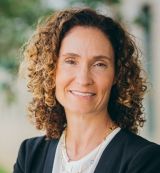
Catherine Beaudry is Full Professor in the Department of Mathematics and Industrial Engineering at Polytechnique Montréal, where she also holds a Canada Research Chair (Tier 1) in the Management and Economics of Innovation. She leads the Partnership for the Organisation of Innovation and New Technologies (4POINT0) and is affiliated with several major research centres, including the Centre interuniversitaire de recherche sur la science et la technologie and CIRANO, and is Associate Professor at the Université du Québec à Montréal. Her expertise focuses on the economics of innovation, research evaluation and innovation ecosystems, particularly on collaboration, science and technology networks, and industrial clusters. Her work informs governance and public policy for innovation systems in Canada and internationally. She holds a degree in electrical engineering from Polytechnique Montréal and a master’s and doctorate in economics from the University of Oxford in England.
Jim Hanlon
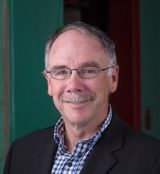
Jim Hanlon is a veteran technology entrepreneur with specialized expertise in marine technology markets, with over 40 years of experience across Atlantic Canada, Ontario and New England. He has held senior roles in engineering, marketing and general management, including positions with multinational companies such as Cobham PLC and Ultra PLC. He co-owned and grew two high-tech companies, one of which was merged into Ultra Electronics Maritime Systems, where he served as President. In 2012, he became the founding CEO of the Halifax Marine Research Institute, which evolved into the Centre for Ocean Ventures and Entrepreneurship (COVE), now Canada’s first Maritime Defence Innovation Secure Hub, which he led until his retirement in 2020. He serves on multiple boards and advisory councils, invests in ocean tech startups and mentors emerging entrepreneurs. He holds a bachelor’s degree in electrical engineering from Dalhousie University and an MBA in marketing from Saint Mary’s University, and is a registered professional engineer in Nova Scotia.
José Luis Martínez Pena
José Luis Martínez Pena is a distinguished physicist and research leader with extensive experience in materials science and research infrastructure. Early in his career, he conducted research at the Nagoya Institute of Technology in Japan and at Brookhaven National Laboratory in the United States. He was Full Professor of physics at the Autonomous University of Madrid in Spain (1984–87) and later worked at the European research facility Institut Laue-Langevin in Grenoble, France. In 1992, he joined the Spanish National Research Council at the Institute of Materials Science in Madrid and held several senior research management roles, including Deputy Director General for Research Projects at the Spanish State Secretariat for Research and Development, and Deputy Director General of Institut Laue-Langevin (2007–12). Since 2016, he has served on the French Nuclear Waste Evaluation Commission and is Chair of the European Strategy Forum on Research Infrastructures (2024–26). He holds a PhD in materials physics from the Autonomous University of Madrid.
Shannon Quinn
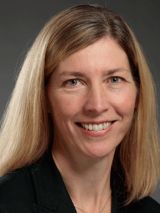
Shannon Quinn has served as Secretary General of the National Research Council of Canada (NRC) since September 2021. In this role, she supports the NRC in advancing Canada’s science, research and innovation agenda, with responsibilities spanning strategy, policy, facilities renewal, governance, stakeholder and Indigenous engagement, communications and performance. She is an experienced executive with a background in science and technology across both the public and private sectors. Previously, she was Vice President, Science, Technology and Commercial Oversight at Atomic Energy of Canada Limited and held senior roles at Natural Resources Canada. She also worked in the steel industry and served as Adjunct Professor at McMaster University. She holds a BSc in biochemistry and a BA Sc in chemical engineering from the University of Ottawa, a PhD in chemical engineering from Queen’s University and an MBA from the University of Ottawa.
Mark Redmond
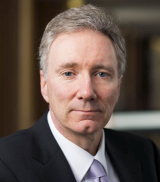
Mark Redmond is a senior agriculture and biosciences leader and has served as CEO of Results Driven Agriculture Research (RDAR), an Alberta-based research organization, since March 2021. He has more than 25 years of experience in senior business, research and academic roles within the agriculture and animal health sectors. Prior to RDAR, he was Director of Incubation Services at PEI BioAlliance, leading bio-based research across Atlantic Canada. He has strong academic ties to Alberta, having served as Associate Dean at NAIT’s School of Health and Adjunct Professor at the University of Alberta and the Western College of Veterinary Medicine. He holds a PhD in molecular biology and immunology and specializes in animal health and value-added agricultural innovation.
Liz Sonenberg
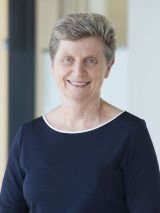
Liz Sonenberg is Emeritus Professor at the University of Melbourne in Australia, a researcher in artificial intelligence, an experienced university leader and a board director. In her most recent role as the university’s Pro Vice Chancellor (Systems Innovation), she contributed to university-wide technology planning and investment. Earlier responsibilities included facilitation of interdisciplinary research across the University of Melbourne and oversight of university research infrastructure policies. She was previously Deputy Head of the Department of Computer Science and Software Engineering and served for eight years as Head of the Department of Information Systems. In 2020, she received the Distinguished Research Contribution in the Australasian AI Awards. She is a graduate of the Australian Institute of Company Directors and has held directorships of several small companies associated with the university. She has also been on the advisory and management boards of several major state and Commonwealth-Government-funded research infrastructure initiatives. She is Chair of Australia’s National Research Infrastructure Advisory Group, which advises the Commonwealth Department of Education on research infrastructure planning, and and is Chair of the Expert Working Group, which is developing Australia’s 2026 National Research Infrastructure Roadmap.
Rashid Sumaila
Rashid Sumaila is Professor and Canada Research Chair (Tier 1) in interdisciplinary ocean and fisheries economics at the Institute for the Oceans and Fisheries and the School of Public Policy and Global Affairs at the University of British Columbia. He is the recipient of the 2023 Tyler Prize for Environmental Achievement — often referred to as the “Nobel Prize for the Environment.” His expertise centres on bioeconomics and marine ecosystem valuation, with research addressing global ocean challenges such as fisheries subsidies, marine protected areas, illegal fishing, climate change, marine plastic pollution and oil spills. He has worked extensively across multiple regions, including Canada and the North Atlantic, Norway, Southern and West Africa, and the South China Sea. He holds a PhD in economics from the University of Bergen and is widely published.
John Womersley
John Womersley is Special Advisor in the College of Science and Engineering at the University of Edinburgh in Scotland, where he coordinates space and defence-related activities and identifies interdisciplinary research opportunities. He chairs the Technical Advisory Committee for the International Fusion Materials Irradiation Facility DEMO Oriented Neutron Source (IFMIF-DONES), a European fusion materials testing facility in Spain, and the Project Advisory Committee for the Next Generation Event Horizon Telescope Project. He formerly served on the Board of Fermi Research Associates, which operates Fermilab for the U.S. Department of Energy. He is a former Director General of the European Spallation Source in Lund, Sweden, and previously served as Chief Executive of the UK’s Science and Technology Facilities Council. He also chaired the European Strategy Forum for Research Infrastructures from 2013 to 2016. He holds a bachelor’s degree from Cambridge University and a PhD in experimental physics from the University of Oxford.